
This past week I attended a conference in the Brazilian capital of Brasilia, hosted by the Brazilian Senate and organized by Bussola Tech and the Organization of American States (OAS). The theme of the conference was “Structuring the Digital Legislative Process for Integration with Public Artificial Intelligence Interfaces”.

This conference was one in a series of conferences I have attended over the past couple of years where the emergence AI has been the focus.
I gave a talk on some of the AI projects we are working on at Xcential and how structured data enables them. Later, I participated in a panel discussion with many familiar faces. The panel was chaired by Wade Ballou, the former Legislative Counsel for the U.S. House of Representatives along with Monica Palmirani from the University of Bologna, Fotis Fitsilis from the Hellenic Parliament, and Juliano Bringer from Agape Consulting. The topic explored the theme of the conference from our various perspectives.
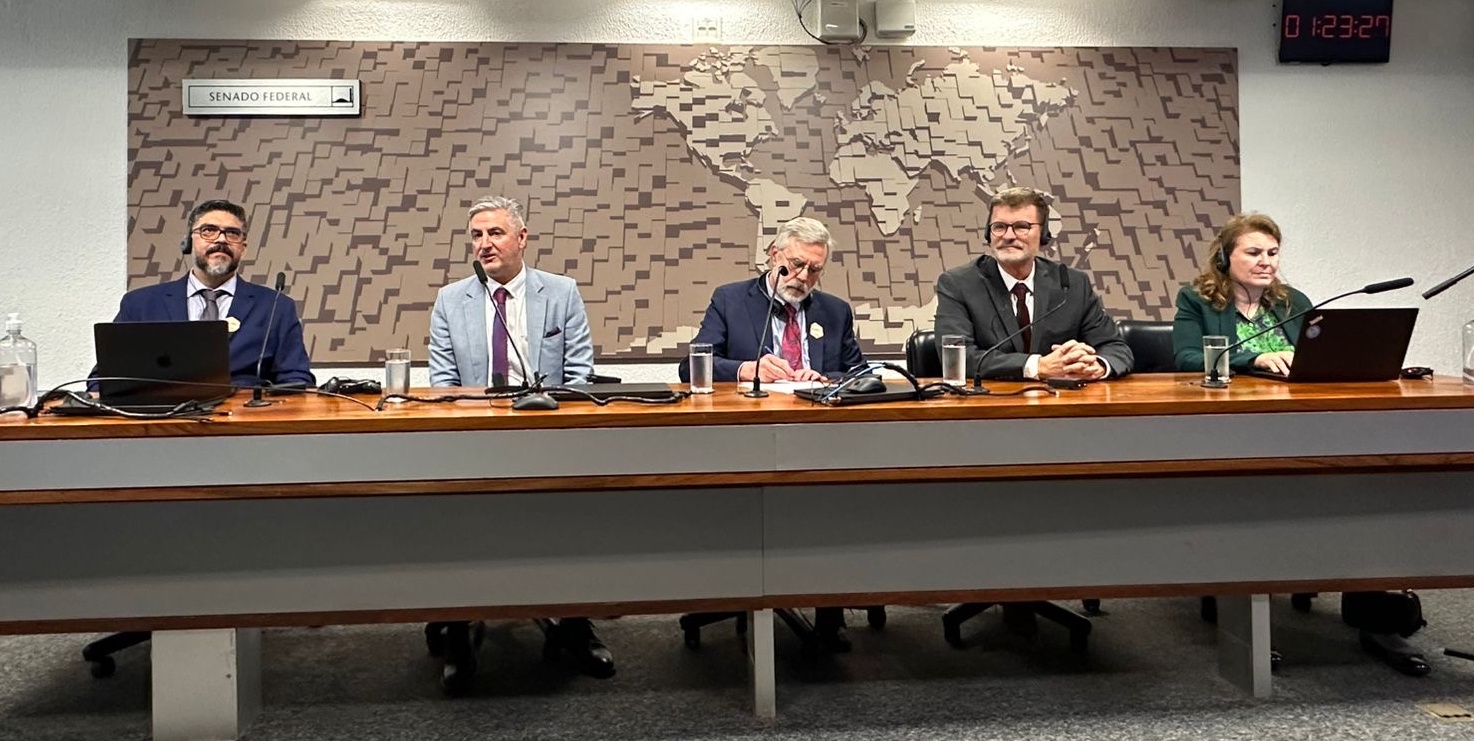
There were a number of interesting points made at the conference ranging from how AI is already being used in support of legislative drafting and to improve citizen engagement to the concerns of how AI will affect human critical thinking skills and the environmental impact of the massive electrical and cooling resources needed to maintain the data centers that provide AI services.
All these points got me thinking more about what our response to AI should be. AI is clearly the next big thing and is already profoundly changing how we, as humans, live our lives. As with every development, there will be winners and losers. Those who adapt and take advantage of the new capabilities will profit while those who can’t adapt will find themselves sidelined by progress.
However, there is also a more insidious side to the emergence of AI in our society. Like social media before it, despite all the positive changes it can bring, it can easily be exploited to harm society. How we prepare for AI will determine whether it ends up being a net positive or net negative to the world.
In my coming blogs, I’m going to explore these points further.
 Legis Info